

Glass, Stainless Steel, or Plastic: Which Water Bottle Material Is Actually Better for You?
Most people picking a reusable water bottle get stuck on one question: is glass really better than plastic? The short answer is yes — but that doesn't automatically make glass the right choice for you. Because the real comparison is three-way, and each material wins in some situations and loses badly in others.
Here's an honest map of the trade-offs, without the hedging.
Plastic: The Convenient One With Caveats
Plastic bottles are light, cheap, and nearly indestructible. For a lot of people, that's enough — and for years it was the default. The problem isn't plastic as a material category; it's the specific chemicals that some plastics leach, particularly when exposed to heat or repeated washing.
BPA (bisphenol A) is the most well-known offender, and most reputable brands have moved away from it. But "BPA-free" doesn't mean chemical-free — some BPA substitutes are still being studied. If you're using a plastic bottle that's been sitting in a hot car or run through the dishwasher a hundred times, that's where the concern is most legitimate.
Plastic also holds on to odors and flavors over time. That faint protein-shake smell that won't leave your gym bottle? That's plastic being porous in a way that glass and stainless steel simply aren't. For a deeper look at keeping any bottle genuinely clean, this guide on avoiding mold, bacteria, and hidden toxins is worth reading.
Best for: Short-term use, kids' bottles, situations where weight and cost are the priority.
Skip it if: You're using it daily for hot drinks, or you care about taste neutrality.
Glass: The Taste Champion With One Fatal Flaw
Glass is genuinely excellent at one thing: it doesn't interact with your drink at all. No metallic taste, no plastic off-notes, no absorbed odors from yesterday's green juice. What you put in is what you taste. For that reason alone, glass has earned its reputation among people who are particular about flavor — especially coffee and tea drinkers.
It's also easy to clean, non-porous, and completely free of chemical concerns. You can see exactly what's inside and how clean it is.
The problem is obvious the moment you drop one.
Glass bottles are heavy, they shatter, and even the ones with silicone sleeves have limits. Taking a glass bottle on a hike, to the gym, or even just tossing it in a bag with your laptop is a calculated risk every single time. And unlike stainless steel, glass offers zero insulation — your cold brew will be lukewarm before you get to the office.
Best for: Home use, slow mornings, anyone who treats their bottle carefully and values taste above everything.
Skip it if: You're active, you commute, or you've already broken two of them.
Stainless Steel: The Durable Default — With One Complaint
Stainless steel is where most serious hydration gear has landed, and for good reason. It's durable, it insulates well with a double-wall vacuum construction, and it doesn't carry the chemical concerns of plastic. Drop it on concrete and it dents; it doesn't shatter.
The one complaint that comes up consistently — especially from coffee and tea drinkers — is metallic taste. Standard stainless steel interiors can impart a faint metallic note, particularly with acidic drinks or when the bottle is new. For plain water, most people don't notice it. For a carefully brewed pour-over or a delicate herbal tea, it's more noticeable.
This is the gap that ceramic-lined stainless steel was designed to close.
Why Ceramic Lining Changes the Comparison
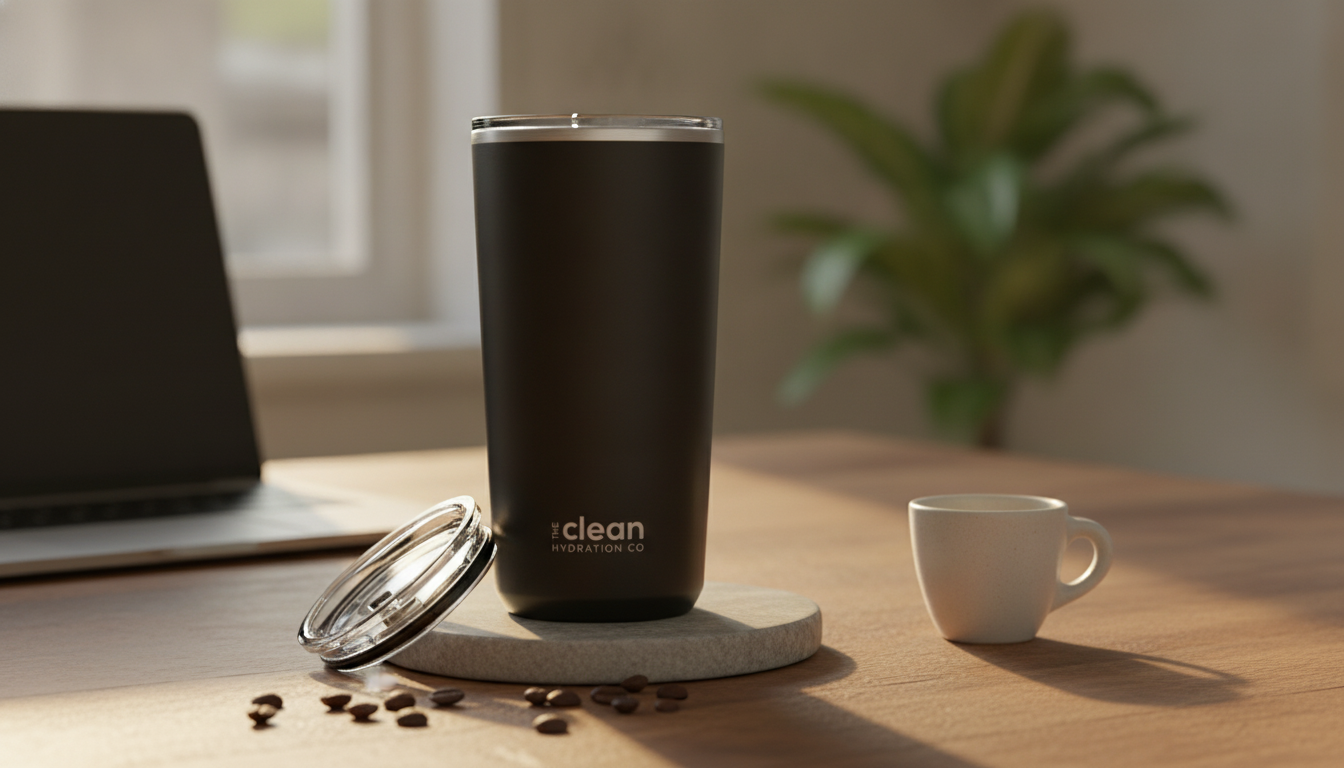
The argument for glass has always been taste purity. Ceramic lining addresses exactly that — without the fragility. The Clean Hydration Co's 20oz tumbler uses a ceramic-lined interior (CeraTech construction) that sits between your drink and the stainless steel wall, so your coffee tastes like coffee, not like the inside of a flask.
Pair that with double-wall vacuum insulation and you get something glass can't offer: your drink stays at the right temperature for hours, whether that's a morning coffee on a long commute or an iced drink on a summer hike. The exterior is premium food-grade 18/8 stainless steel, so it handles the drops and the bag-throws that would end a glass bottle's life. It's also 100% BPA-free throughout.
At 20oz, it fits most car cup holders — which sounds like a small thing until you're driving and fumbling with a lid that doesn't fit the cupholder. The spill-resistant lid handles the other scenario: the bag that gets knocked off a desk.
For anyone who's been drawn to glass specifically because they hate that metallic taste, this is the more practical answer. You get the flavor neutrality of glass with the durability and insulation of stainless steel. It's not a compromise — it's the better version of both.
The Honest Verdict by Use Case
- You want the purest possible taste at home, and you're careful with your things: Glass is genuinely great here.
- You're active, commuting, or just need something that survives real life: Stainless steel wins — and ceramic-lined stainless steel wins without the taste trade-off.
- You need something ultra-light for a specific purpose and cost is a factor: A quality BPA-free plastic bottle has a place, but it's not a long-term daily driver.
- You drink coffee or tea on the go and care about flavor: Ceramic-lined stainless steel is the answer. It's the only format that handles taste, temperature, and durability at the same time.
If you want to go deeper on how hydration habits actually affect you day-to-day, this piece on hydration and cognitive function is worth your time — the material you drink from matters less than whether you're actually drinking enough.
And if you're still working out how much that actually is, the complete guide to personalized daily hydration breaks it down without the generic advice.
The bottle that sits on your desk unused because it's too heavy, too fragile, or tastes off isn't doing you any good. Pick the material that actually fits your day — and if that's ceramic-lined stainless steel, explore The Clean Hydration Co's tumbler lineup and see what a taste-neutral, durable daily driver looks like in practice.
Frequently Asked Questions
Is a glass water bottle actually safer than plastic?
In general, yes — glass doesn't leach chemicals the way some plastics can, especially under heat or heavy use. It's non-porous, taste-neutral, and easy to clean thoroughly. The trade-off is weight and breakability, which makes it impractical for many people's daily routines.
Why does my stainless steel bottle taste metallic?
Standard stainless steel interiors can impart a faint metallic note, particularly with acidic drinks like coffee, tea, or citrus water. It's more noticeable in new bottles and with flavored beverages. A ceramic-lined interior sits between the drink and the steel wall, preventing that interaction entirely.
Can I use a stainless steel tumbler for both hot and cold drinks?
Yes — double-wall vacuum insulation works in both directions, keeping hot drinks hot and cold drinks cold for extended periods. This is one of the key advantages stainless steel has over glass, which offers no meaningful insulation at all.
What does BPA-free actually mean, and should I care?
BPA (bisphenol A) is a chemical used in some plastics that has raised health concerns, particularly around hormonal disruption. BPA-free means that specific chemical isn't present. For stainless steel and ceramic-lined bottles, BPA-free is straightforward — there's no plastic in the drink-contact surfaces to begin with. It's most relevant when evaluating plastic bottles and lids.