

Ceramic-Lined vs. Stainless Steel vs. Glass: Which Travel Mug Interior Actually Keeps Your Coffee Tasting Right?
You spent real money on good coffee beans, dialed in your brew, and poured it into your travel mug — only to take a sip twenty minutes later and taste something vaguely metallic, or just flat and wrong. The coffee is still hot. But it doesn't taste like coffee anymore.
That's not a temperature problem. That's an interior problem. And it's the conversation most travel mug comparisons skip entirely, because they're too busy debating handle styles and brand logos.
Let's talk about what's actually touching your drink.
The Three Interiors, Honestly Assessed
Bare Stainless Steel
Stainless steel is everywhere in the travel mug market, and for good reason — it's durable, lightweight, and handles temperature extremes without cracking. The double-wall vacuum insulation that keeps your coffee hot for hours is almost always built around a stainless steel shell.
The problem is the interior surface itself. Bare stainless steel is reactive enough that certain compounds in coffee — particularly those in darker, more acidic roasts — can interact with the metal surface and leave a detectable metallic edge. It's subtle for some people, pronounced for others, and it tends to get worse over time as the interior accumulates residue that's genuinely difficult to scrub out of a narrow cylinder.
There's also the odor issue. Stainless steel can absorb and hold onto smells. If you've ever rinsed a stainless tumbler and still caught a ghost of yesterday's coffee, you know what this means in practice. It's not a dealbreaker for everyone, but for people who switch between coffee, tea, and water throughout the day, it matters.
Bottom line: excellent structure, imperfect surface for flavor-sensitive drinkers.
Glass
Glass is chemically inert. It doesn't react with your coffee, doesn't hold odors, and doesn't impart any taste of its own — which is why serious coffee enthusiasts often prefer glass for brewing and tasting. What you brew is what you taste, with nothing added by the vessel.
The trade-off is everything else. Glass travel mugs are heavier, genuinely fragile, and their insulation performance typically lags behind vacuum-sealed stainless steel. A glass-lined travel mug dropped on a tile floor is usually a one-way trip. They're also harder to find in truly spill-resistant designs that hold up to a bag or a car cup holder without anxiety.
Glass is the gold standard for taste purity at home. As a travel mug for a commute, a gym bag, or a hiking trail, it asks you to make too many compromises.
Bottom line: best taste neutrality, worst real-world practicality.
Ceramic-Lined (CeraTech) Interiors
Ceramic coatings applied to the inside of a stainless steel tumbler are designed to solve the exact problem bare stainless creates — they put an inert, non-reactive layer between your drink and the metal. Ceramic doesn't interact with coffee compounds the way bare steel can, which means the flavor you poured in is much closer to the flavor you taste when you drink it.
It also resists odor retention. Ceramic surfaces are easier to rinse clean and don't hold onto the aromatic residue that can make a bare steel mug smell like a coffee shop after a few weeks of daily use.
The structural backbone is still stainless steel, so you keep all the durability and insulation performance that makes stainless the dominant material in travel drinkware. You're not choosing between taste and toughness — you're getting both.
The one caveat: ceramic coatings can chip if the mug is dropped hard or cleaned with abrasive tools. Treat the interior with the same care you'd give a ceramic mug at home — no steel wool, no harsh scrubbing — and it holds up well.
Bottom line: the closest thing to glass taste neutrality in a form factor that actually works on the road.
A Quick Side-by-Side
| Interior Type | Taste Neutrality | Odor Resistance | Insulation Performance | Durability |
|---|---|---|---|---|
| Bare Stainless Steel | Moderate | Moderate | Excellent | Excellent |
| Glass | Excellent | Excellent | Good | Poor |
| Ceramic-Lined | Excellent | Excellent | Excellent | Good |
Why This Matters More for Coffee Than for Water
Water is forgiving. Coffee is not. Coffee contains hundreds of volatile aromatic compounds — the ones responsible for why a freshly poured cup smells the way it does — and they're sensitive to what they come into contact with. A bare metal surface can mute or distort those aromatics in ways that are hard to pin down but easy to notice: the coffee tastes duller, or carries a slight metallic finish on the back of the palate.
Tea drinkers run into the same issue, particularly with lighter, more delicate teas like green or white varieties where flavor subtlety is the whole point. If your current mug is making your Earl Grey taste like a hardware store, the interior is almost certainly the culprit.
For a deeper look at how hydration habits and beverage choices interact day-to-day, the post on personalizing your daily hydration is worth a read alongside this one.
The Clean Hydration Co. 20oz Ceramic-Lined Tumbler
The matte black 20oz tumbler from The Clean Hydration Co. is built around exactly this logic. The CeraTech ceramic-lined interior sits inside a premium food-grade 18/8 stainless steel shell, with double-wall vacuum insulation keeping drinks hot or cold for hours. The result is a mug that has the structural integrity and temperature performance of stainless, with an interior surface that doesn't fight your coffee for flavor.
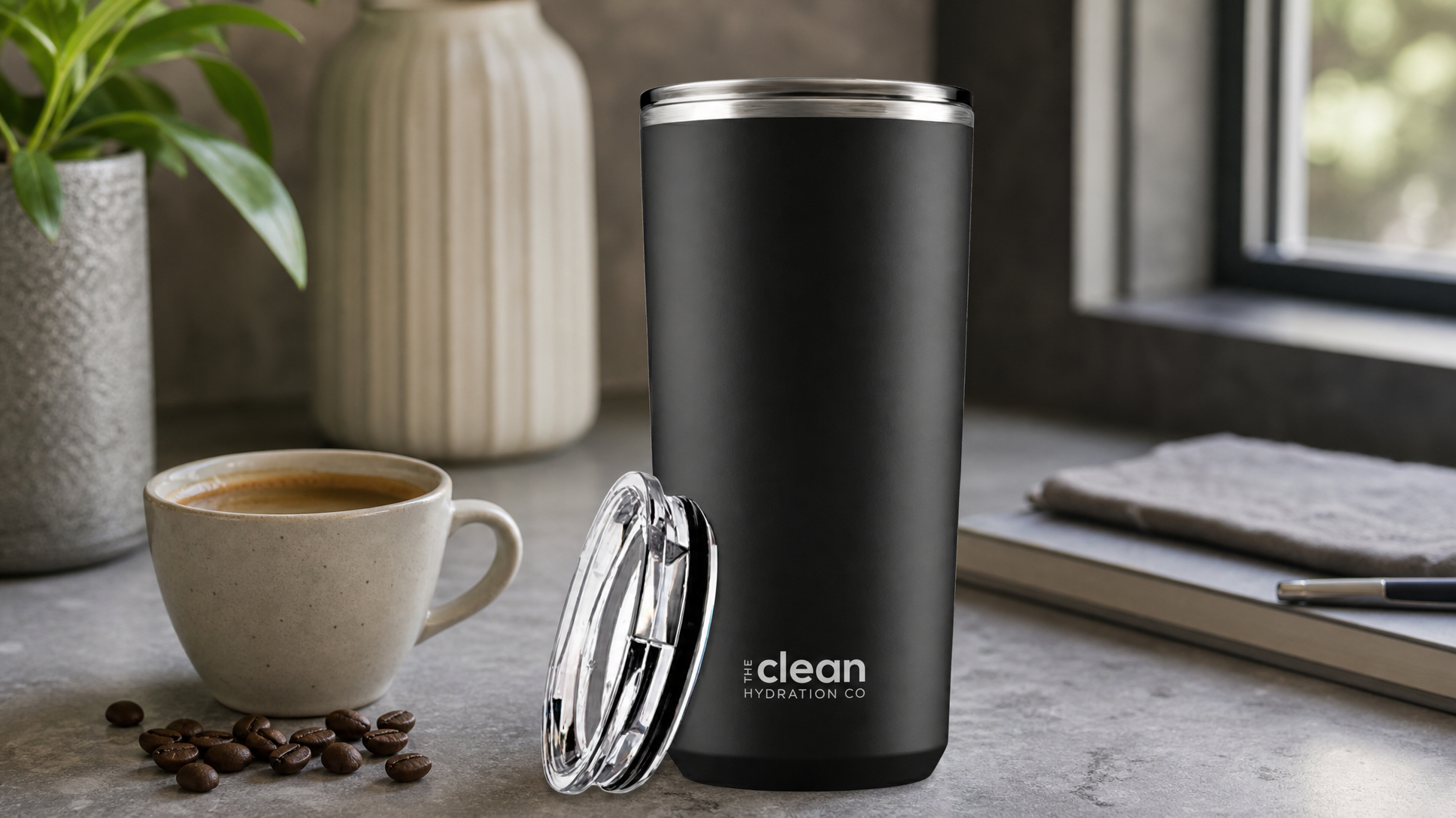
It's 100% BPA-free, comes with a spill-resistant lid, and fits in a standard car cup holder — which sounds like a small thing until you're driving and your mug is wobbling in the console. The clear snap lid shown with the tumbler keeps things secure without adding bulk.
This is the kind of mug that makes sense if you've already tried a stainless steel tumbler and noticed something off about the taste, or if you're the person who defaults to a ceramic mug at home because you know it tastes better — and you want that same experience when you're not at home.
If you're comparing travel mug options more broadly, our full tumbler collection is a good place to see what else is available.
The Verdict
If taste is your priority and you need a mug that can actually travel with you, ceramic-lined wins. Glass gives you the same taste neutrality but fails on durability and insulation. Bare stainless steel is reliable and tough but asks you to accept a flavor compromise that — once you've noticed it — you can't un-notice.
The metallic edge in your morning coffee isn't inevitable. It's a material choice, and it's one you can change.
See how the 20oz Ceramic-Lined Tumbler compares for yourself — shop The Clean Hydration Co. tumblers and find the one that fits your routine.
Frequently Asked Questions
Does a ceramic-lined tumbler keep drinks as hot as a bare stainless steel one?
Yes. The ceramic coating is applied to the interior surface, not the insulation structure. The double-wall vacuum insulation — which is what actually keeps drinks hot or cold for extended periods — is unchanged. You're not trading insulation performance for better taste; you're getting both.
Is the ceramic lining safe? Could it chip into my drink?
Ceramic-lined tumblers are made with food-safe ceramic coatings and are BPA-free. Like any ceramic surface, the interior can chip if the mug is dropped hard or scrubbed with abrasive materials. Stick to gentle cleaning — a soft brush or sponge with warm soapy water — and the coating holds up well with regular use.
Why does my stainless steel travel mug make coffee taste metallic?
Bare stainless steel can interact with the acidic compounds and aromatic oils in coffee, especially with darker roasts or after the mug has been used repeatedly without thorough cleaning. The effect is subtle for some people and more noticeable for others. A ceramic-lined interior creates a non-reactive barrier between the liquid and the metal, which eliminates that interaction and preserves the coffee's original flavor.
Can I use a ceramic-lined tumbler for cold drinks too, or is it just for coffee?
Ceramic-lined tumblers work just as well for cold beverages. The ceramic interior is taste-neutral regardless of temperature, so iced tea, cold brew, or plain water all benefit from the same lack of metallic interference. The vacuum insulation keeps cold drinks cold for hours, making it a practical all-day option rather than a dedicated coffee mug.